
A prospective study on a cohort of horses and ponies selected for participation in the European Eventing Championship: reasons for withdrawal and predictive value of fitness tests
Carolien C B M Munsters, Jan van den Broek, Emile Welling, René van Weeren & Marianne M Sloet van Oldruitenborgh-Oosterbaan (2013). BMC Veterinary Research 9(182). https://doi.org/10.1186/1746-6148-9-182
Background
Eventing is a challenging equestrian sport combining dressage, cross-country, and show jumping. Horses and ponies competing at high levels, like the European Championships, face significant physical challenges, leading to relatively high rates of injury and withdrawal. To improve animal welfare, it is important to understand the causes of these issues. This study monitored fitness and training in eventing horses and ponies preparing for the European Championships to explore the link between fitness levels and injury risks, aiming to reduce equine injuries and improve performance.
Methodology
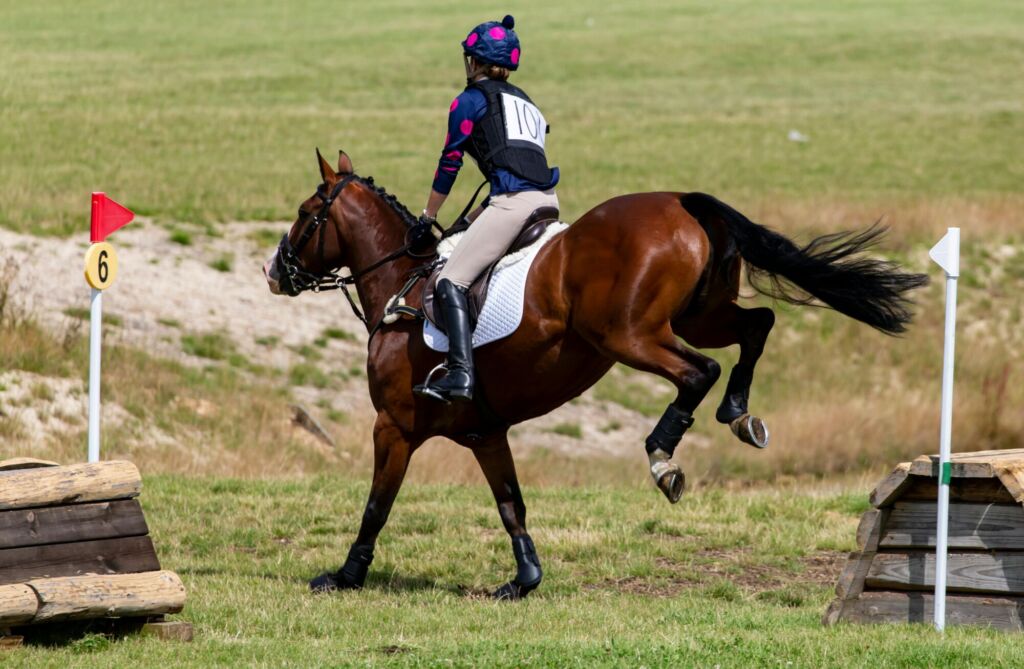
This study tracked the fitness and injury rates of 20 international event horses (4* and 5* level) and 9 ponies (CCIP2**) from the Dutch national team during preparations for the European Championships in 2010–2011. During standardized exercise tests at the beginning and at the end of the competition season, heart rate, speed, and plasma lactate levels were measured. All injuries and withdrawals during the season were recorded. In addition, all conditional training sessions between standardized exercise test I and II in a sub population of ten horses were monitored with heart rate and speed.
Results
This study found that 45% of the national team squad of eventing horses and ponies had to withdraw from the European Championships due to injuries, primarily locomotor issues. Horses with higher fitness levels had no injuries compared to horses with lower levels of fitness, 50% of these horses got injured during the competition season, highlighting the importance of proper training and balance with competition performance. Monitoring training sessions helped predict future injuries. In addition, horses that later got injured showed higher peak heart rates during conditioning than those that stayed sound. This rise in heart rate often occurred before any visible lameness appeared.
To prevent injuries, eventing horses and ponies need to be fit enough to handle the demands of high-level competition. This study suggests that careful monitoring could help achieve this.
Recente berichten
- Cooling Your Horse: Effective Strategies to Beat the Heat 22 mei 2026
- Optimizing Your Horse’s Training with a Heart Rate Monitor 22 mei 2026
- Sweating and the Importance of Electrolytes in Horses 22 mei 2026
- Leg Protection and Heat: What Every Rider Should Know 22 mei 2026
- How Do Horses Regulate Their Body Temperature? 22 mei 2026